
Why Satellite Phones Can’t Be Jammed Like Cellphones – And Why That Matters for Security Guards or Teams
- GMagid

- Feb 19
- 4 min read
In South Africa, we’ve all heard the stories. Armed robbers arrive at a remote site. Within seconds, cellphones lose signal. Two-way radios go silent. CCTV stops streaming. The team on the ground is cut off.
Signal jamming is no longer a theory. It’s a real-world tactic used to isolate a location before a break-in, hijacking or coordinated attack.
This is where satellite communication changes the game.
If you are running security at a remote farm, mining site, logistics yard, construction project or high-value estate, relying purely on GSM or standard UHF/VHF radios is a risk. A satellite phone operates in a completely different way — and that difference makes it significantly harder to jam.
Let’s unpack why.
How Criminals Jam Cellphones and Two-Way Radios
Signal jammers are illegal in South Africa, but that hasn’t stopped criminals from using them.
A jammer works by broadcasting a stronger radio signal on the same frequency band used by:
GSM cellular networks (MTN, Vodacom, Telkom, etc.)
3G / 4G / LTE
Standard VHF and UHF two-way radios
When that interference signal is stronger than the legitimate one, your device can’t connect. It’s like trying to hear someone whispering while someone shouts directly into your ear.
For security teams, that means:
Panic calls don’t go through
Radios become static
Control room can’t reach the guards
Remote CCTV linked via GSM drops offline
Alarm systems don't alert Security
The attackers have created isolation before they even step out of their vehicle.
Now compare that with satellite communication.
Why Satellite Phones Are Different
A satellite phone does not rely on local cell towers.
Instead, it connects directly to satellites orbiting the Earth — often hundreds or thousands of kilometres above you. For example:
Iridium Communications operates a constellation of low-earth orbit satellites circling the globe.
Inmarsat uses geostationary satellites positioned high above the equator.
Thuraya just launched a Satellite that finally covers the whole of South Africa making the new Thuraya Skyphone Android smartphone an excellent option.
Your signal travels upward to space — not sideways to a nearby tower.
That single difference makes jamming dramatically harder.
Why Satellite Signals Are Extremely Difficult to Jam
Here’s what makes satellite phones far more resilient:
1. The Signal Goes Up, Not Across
Cellphones connect to towers typically within a few kilometres.
Satellite phones transmit directly upward to space. To jam that, a criminal would need to:
Know the exact frequency band used
Transmit a powerful signal aimed precisely at the satellite
Overpower a signal designed for global coverage
That is not something achieved with a cheap car-mounted jammer.
2. The Power and Direction Required Is Massive
A GSM jammer only needs to overpower local tower signals within a limited area.
To interfere with a satellite link, a jammer would need:
Significant power output
Advanced directional antennas
Precise frequency targeting
Technical expertise
That level of equipment moves from “criminal tool” to “military-grade capability.”
It’s not impossible in theory — but it’s practically unrealistic in real-world robbery scenarios.
3. Satellite Networks Use Advanced Modulation and Spread Spectrum
Modern satellite networks use sophisticated communication techniques designed to resist interference.
Without going too technical, these include:
Frequency management systems
Signal encryption
Spread spectrum technologies
Redundant satellite routing
Even if interference occurs in one area, the network architecture often compensates.
This makes satellite communication inherently more robust than traditional analogue or GSM systems.
Why This Matters for Security Guards in Remote Locations
Think about the environments where signal jamming is most dangerous:
Remote farms
Solar farms
Mining operations
Border sites
Construction projects
High-value equipment storage yards
These are often:
Far from urban infrastructure
Poorly covered by cellular networks
Slow for armed response to reach
If criminals jam GSM and radios, your guards could be completely isolated.
A satellite phone provides:
Direct voice communication anywhere
Emergency contact even with zero GSM coverage
Reliable check-in procedures
Panic escalation to head office
For security companies operating in high-risk areas, this is not a luxury device — it’s a strategic risk-reduction tool.
Real-World Scenario: GSM Jammed, Satellite Still Works
Imagine this situation:
A security team protects a rural warehouse storing high-value copper cables.
At 02:15, GSM drops. Radios go static.
Within minutes, attackers breach the perimeter.
If the guards only have cellphones and two-way radios, they are cut off.
But if the team has a satellite phone:
One guard steps outside. (keep in mind an indoor docking station can be used with antenna already outside on the roof making it much easier and safer.)
Antenna extended
Direct call placed to control
Armed response dispatched
Even if the site’s CCTV and GSM fail, communication survives.
That single device changes the outcome.
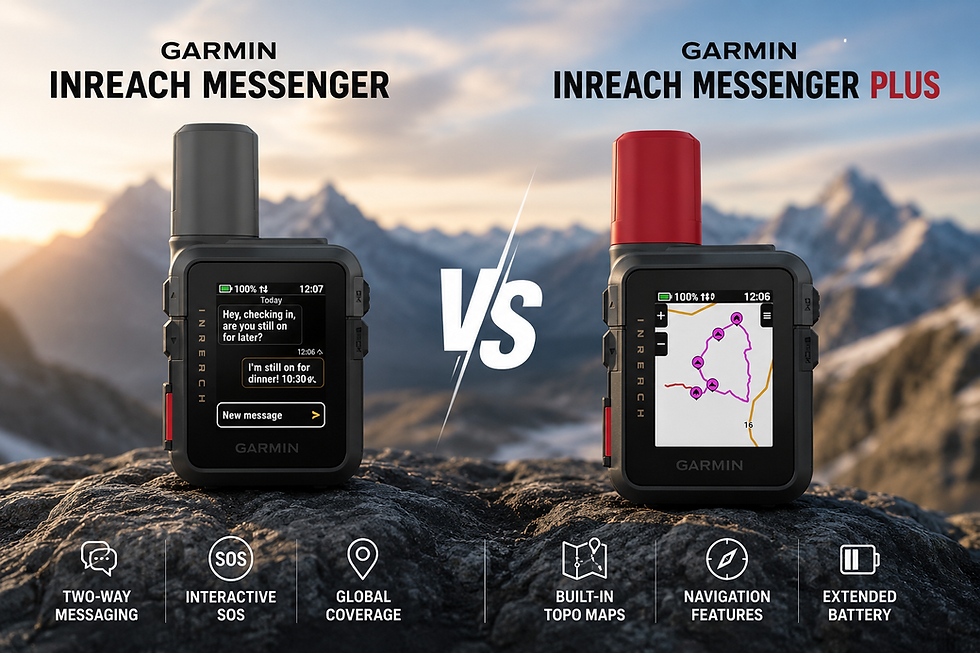
Which Satellite Phones Are Best for Security Teams?
Two of the most reliable options globally are:
Exceptional battery life
Rugged, dust and splash resistant
Reliable voice clarity
Cost-effective airtime
Ideal for Africa
This is a favourite for farms, mines and remote security posts.
True global coverage
Extremely durable
Compact design
Strong network redundancy
Often preferred for high-risk environments requiring global reliability.
Important Note: Nothing Is 100% Unjammable
Let’s be realistic.
No communication system on Earth is theoretically immune to interference.
However:
GSM jamming = easy and common
Two-way radio jamming = possible with basic equipment
Satellite phone jamming = highly complex and impractical for criminal use
In real-world South African security scenarios, satellite phones provide a massive resilience advantage.
Did you know? Your car alarm/locking system can be jammed with a simple remote that can be bought at any retailer, and most of the time people don't even notice the alarm was jammed, walk away, and their car isn't locked or armed.
The Strategic Security Advantage
For professional security teams, communication is survival.
When you analyse risk at remote sites, ask:
What happens if GSM fails?
What happens if radios are jammed?
How does the team escalate a life-threatening incident?
If the answer depends solely on terrestrial networks, there is vulnerability.
Satellite communication adds a layer that criminals cannot easily disrupt.
It ensures:
Continuous command contact
Incident reporting during outages
Backup communication in disasters
Reliable panic escalation
Many businesses hesitate because of the cost of a satellite phone.
But compare that cost to:
Loss of high-value stock
Injury to staff
Insurance claim disputes
Reputational damage
Legal liability
In high-risk or isolated environments, a satellite phone is not an expense — it’s insurance.
For security companies protecting remote assets in South Africa, satellite communication is becoming standard best practice.
If you are reviewing your site risk profile, this is one upgrade that directly reduces vulnerability.
And in security, resilience is everything.


Comments